
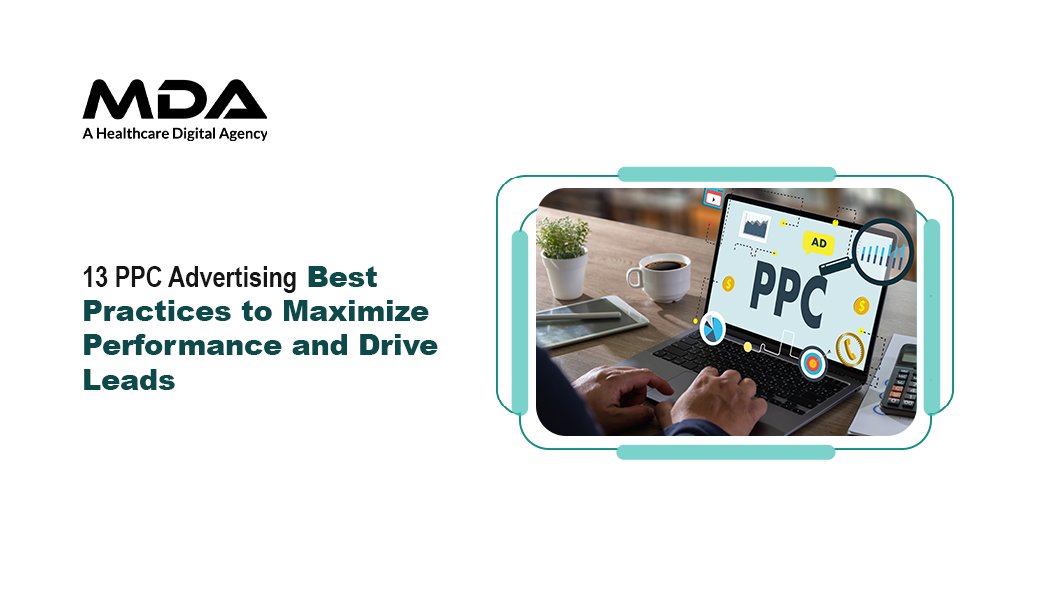
Pay-per-click advertising provides you with instant visibility and measurable results if you use it wisely. For organizations operating in crowded markets or dealing with complex compliance issues, campaign management should be done in an organized way, which will separate profitable performance from wasted budgets.
This guide details 13 time-tested practices that boost click-through rates and decrease cost per acquisition, and turn paid traffic into qualified business opportunities.
Build campaigns around defined outcomes: lead generation, appointment bookings, product sales, or brand awareness. Each objective will require unique bid strategies, ad formats, and conversion tracking mechanisms.
Segment campaigns by service line, geographical market, or customer intention stage. This structure leads to a better Quality Score and allows to allocate the budget on the basis of the performance data and not assumptions.
Generic targeting is inflating costs and attracting unqualified clicks. The next step, as it always is, has been to define audiences based on job titles, professional demographics, behavioral signals, and intent data.
For targeted industrial sectors, layered targeting (a combination of location, industry, and search behavior) guarantees that ads will reach decision-makers who are actively considering solutions. Exclude irrelevant audiences to preserve budget efficiency.
Generic messaging doesn’t work to get people engaged. Effective ad copy identifies a problem that can be recognized by the target audience, offers a solution, and presents a specific call to action.
Use headlines that reflect the searcher’s language. Highlight differentiators like compliance know-how, specialized technology, or outcome guarantees. Avoid superlatives without supporting evidence.
Disconnected experiences between ad promise and landing page content destroy conversion rates. Every ad group should take the traffic to a separate page that continues the story set in the ad.
Eliminate navigation distractions. Use convincing headlines, trust markers, and single focus forms. Test page load time mercilessly — delays of more than three seconds add a lot to bounce rates.
Every campaign accumulates irrelevant search queries that stimulate ads with no conversion potential. Regular negative keyword audits ensure that budgets are not leaked.
Exclude informational queries if you are selling services, job-related searches, and terms with DIY solutions or free alternatives. Create comprehensive negative lists across campaigns to stay relevant.
Extensions add ad real estate and other avenues for user involvement. Sitelink extensions feature specific services. Callout extensions are used to call out credentials or guarantees. Structured snippets gather the offerings in scannable categories.
Call extension allows for direct contact from the search results on mobile. Location extensions are used for local targeting strategies. Make use of each and every applicable extension type to get the greatest visibility with no extra cost.
Continuous testing determines messaging that resonates with the target audiences. Perform A/B tests on headlines, descriptions, and calls-to-action with statistically significant sample sizes.
Test one variable at a time. Measure, instead of just click-through rate, measure performance against conversion rate. Winning variations should be introduced for similar ad groups, while ongoing tests are done for new angles of the message.
Manual bid adjustments that are based on device type, location, time of day, and audience segment optimize return on ad spend. Analyse conversion data to determine high-performing conditions and allocate budget accordingly.
Automated bid strategies work well if given enough conversion data. Start off with manual controls to get a sense of performance patterns before switching to automation.
Accurate measurement is the driving force for optimization. Track micro-conversions (form starts, video views, document downloads) as well as macro-conversions (completed leads, purchases, bookings).
Use platform-native tracking in conjunction with analytics tools for validation. Set up correct attribution models that represent real customer journeys. For organizations that need to be privacy compliant, first-party tracking solutions maintain the measurement accuracy of the program while adhering to data regulations.
Many providers that offer healthcare PPC services have sophisticated solutions to track on the server side to overcome advertising restrictions while keeping campaign performance in view.
Users do not convert on the first exposure very often. Retargeting campaigns are used to re-engage those who showed interest but failed to take the desired actions.
Segment retargeting audience by behavior: homepage visitors are served with awareness messaging, service page visitors are served with specific offerings, and cart abandoners are served with incentive-based ads. Adjust messaging according to time since first visit
Paid search works best when it’s combined with content marketing, email, and organic social. Consistent messaging across channels builds brand recognition and fosters trust.
Coordinate the timing of campaigns with product launches, seasonal demand cycles, and promotional periods. Agencies that offer healthcare social media services often coordinate paid social campaigns with search advertising to ensure that there is a cohesive multi-channel strategy for the benefit of overall marketing efficiency.
Auction dynamics change as competitors make adjustments to strategies. Regular competitive analysis identifies messaging trends, bid patterns and market positioning changes.
Use auction insights reports to learn about impression share loss and competitive overlap. Strategy adjustments to competitors introducing new offers or changing positioning. Keep abreast of any industry changes that impact the behavior of searches.
Define clear key performance indicators: cost per lead, conversion rate, return on ad spend, and impression share. Establish benchmarks that are realistic and based on industry data and performance history
Conduct weekly tactical reviews for budget pacing & immediate optimizations. Monthly strategic reviews are used to assess campaign structure, audience performance, and creative effectiveness. Quarters of PPC planning bring together PPC strategy and business objectives that evolve.
PPC advertising is a reward for systematic optimization and discipline. Organizations that follow structured testing, ensure measurement accuracy, and campaign against specific business outcomes consistently outperform their competitors with platform defaults and generic best practices.
Sustainable performance that never stops evolving as market conditions, platform capabilities, and user behavior change. The practices described here are meant to provide a framework for continuous improvement, not a one-time implementation checklist.
What is the most important thing when it comes to the success of a PPC campaign?
Conversion tracking accuracy is basic. Without proper measuring, optimising is guesswork. Properly configured tracking allows for data-driven decisions to be made throughout targeting, bidding, and creative development.
How soon will my new PPC campaign pay off?
Initial performance data is meaningful in two to four weeks, depending on the traffic volume. Full optimization takes, on average, 60 to 90 days for algorithms to learn and enough conversion data to build confidence in their decisions.
What budget is required to run successful PPC campaigns?
Minimum viable budgets for each industry are different depending on how competitive the industry is and how large the geographic span is. Most B2B service campaigns need to spend at least $2,000 to $3,000 per month to produce statistically significant data and visibility during business hours.
Should I use automated bidding or manual bid management?
The advantages of manual bidding include control and learning during campaign setup. Automated strategies work well after campaigns have a large volume of conversions (30 to 50 per month) and clear performance patterns are evident. The hybrid approaches often provide the best results.
How do I lower the cost per lead without compromising on the quality of the lead?
Improve Quality Score: ad relevance and landing page experience. Refine targeting of audience to exclude low-intent segments. Test messaging that is attractive to qualified prospects, whilst discouraging unqualified clicks, through specificity and qualification criteria.
What is the perfect campaign structure for multiple services?
Develop individual campaign strategies for each separate service or product line. Within campaigns, construct ad groups around closely themed groups of keywords. This structure helps to improve relevance, makes optimization easier, and allows very precise budget allocation on the basis of the profitability of the service.

C – 81C, Sector – 8, Noida 201301, India


1025 Beamon Drive, Franklin 37064 Tennessee, USA
Sveavagen 34 111 34 Stockholm, Sweden

Copyright ©MDA. All rights reserved.

