
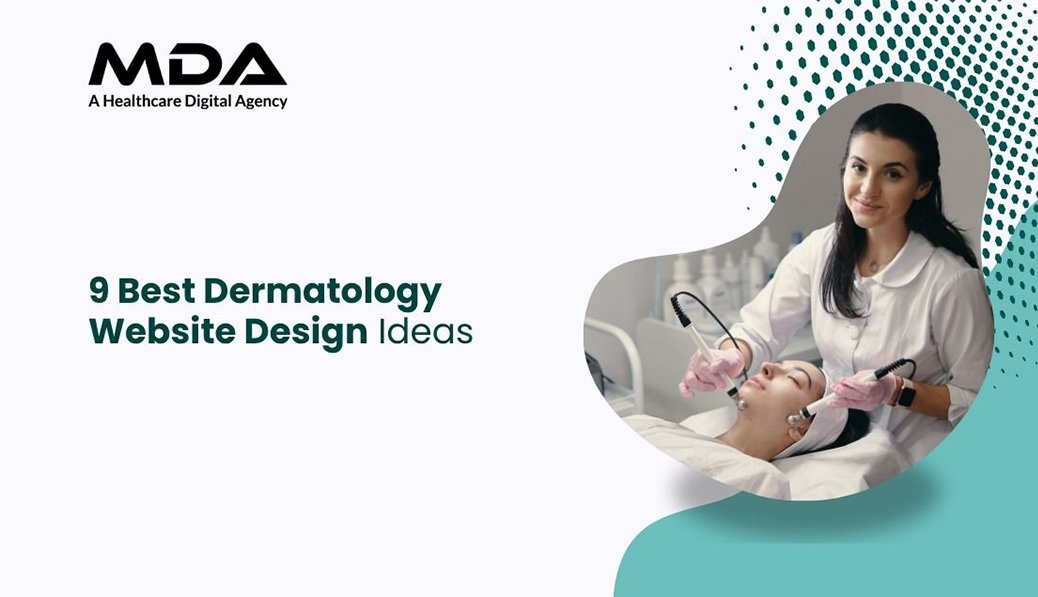
Your dermatology practice website is your main channel of patient acquisition. Before a single appointment is booked, prospective patients assess your credibility, professionalism, and accessibility through your digital presence. A poorly designed website pushes qualified leads to the competitors, who know that clinical excellence must be paired with digital competence.
Modern patients research dermatologists with specific criteria: Will this practice solve my issue with the skin? Will I be confident in their expertise? Is it possible to book an appointment without friction? Your website needs to answer these questions within seconds, or else your visitors will leave to find a practice that does.
This blog sets out nine evidence-based design strategies that help turn website visitors into booked consultations. These recommendations are based on analysis of high-performing dermatology websites, and are consistent with 2026 patient expectations for healthcare digital experiences.
Mobile devices are now responsible for most healthcare searches. Patients who are searching for dermatology services on their smartphones expect pages to load in less than three seconds. Slow-loading websites result in immediate exits, no matter what your clinical qualifications may be.
Optimize your site for mobile-first performance, compressing images without a loss in quality, reducing server response time, and removing render-blocking resources. Google gives preference to mobile-responsive websites in search rankings, so speed optimization is not only an issue of patient experience but also visibility.
Test your site’s load speed on different devices. Pages that work well on desktop but have poor performance on mobile pose major barriers to patients’ acquisition, especially with urgent skin concerns where patients require immediate access to booking information.
Every page on your dermatology website should lead visitors to one obvious course of action: scheduling a consultation. Prominent, strategically placed “Book Appointment” buttons must be visible without scrolling on the homepage, service pages, and practitioner profiles.
Reduce booking friction by providing various ways of contacting that can be used. Online scheduling systems help 24/7 appointment requests capture patients who browse through outside of business hours. Click-to-call functionality on mobile devices allows for instant connection in cases of an urgent concern. Contact forms are for patients who have an asynchronous communication preference.
Place appointment booking modules in the same places on every page. Patients should never look around for how to schedule. The path to conversion has to be immediately obvious and frictionless.
Dermatology is a result-oriented field of medicine. Visual proof of your clinical outcomes is wanted by patients before they even commit to a consultation. Professional before-and-after images show your expertise much better than a description of it.
Organize treatment outcome photos by treatment procedure category with legible labeling. Make sure all images are kept to patient privacy and also to HIPAA. High-resolution photography that accurately portrays skin texture and tone creates credibility and controls patient expectations.
Supplement result images with real patient testimonials to specific concerns. Video testimonials build a better emotional connection than written reviews. Feature verified Google reviews and ratings from third-party platforms to help bolster social proof.
Many dermatology practices have both medical dermatology and cosmetic procedures. Combining these service lines in website navigation creates confusion for the patient and dilutes the effectiveness of messaging.
Develop separate pathways for medical dermatology patients who need treatment for their skin conditions and cosmetic patients who are interested in, for example, aesthetic enhancement. Dedicated landing pages for each category of service are more favorable in search and aid in targeted messaging to address specific patient motivations and concerns.
Medical dermatology pages should include a focus on clinical expertise, insurance acceptance, and the effectiveness of treatment. Cosmetic Dermatology sections may emphasize esthetic results, price information, and elective procedure information. This separation aids the patient in self-identifying their needs and finding relevant information quickly.
Position your practice as a resource for trusted information by publishing clinically accurate information covering frequently asked questions from patients. Educational blog posts will boost search rankings for condition-specific searches as well as show off your knowledge.
Focus content on patient-friendly explanations of skin conditions, treatment options, and prevention strategies. Write in easy-to-read language that is easy to read and understand, and it should be clear and simple without using medical jargon. Answer questions such as “When should I see a dermatologist?” and “What’s the difference between medical and cosmetic treatments?”
Regular content updates let search engines know that your site’s content is the latest and most relevant. This gives support to organic visibility for local dermatology searches, as well as positions your practice as an educational authority that patients can trust.
Your website must serve all the potential patients, including those with disabilities that may have a visual impairment, mobility limitation, or any other accessibility requirement. ADA-compliant design is legally mandated as well as clinically appropriate for healthcare providers.
Implement accessibility features such as alt text for all images, sufficient color contrast for text readability, keyboard navigation, and screen reader compatibility. Provide transcriptions and captions for multimedia content. These modifications increase your patient base while ensuring that your practice is not exposed to legal issues.
Accessibility improvements are often improvements that will improve the overall experience for all users. Clear visual hierarchy, font readability, and logical navigation are beneficial to every patient who visits your site, no matter their ability status.
Appointment scheduling is the most important conversion point on your website. Patients who are trying to book consultations during business hours by calling on the phone are subjected to unnecessary barriers, leading to lower conversion rates.
24/7 online scheduling systems can be used to schedule appointments with a doctor as per the patient’s convenience. Integrating with practice management software: This ensures that your accuracy of availability is accurate in real-time and decreases the administrative burden on your staff.
Post scheduling interfaces prominently throughout your site. Sidebar scheduling widgets ensure booking options are always available as patients are browsing service information. The easier you make it to book an appointment, the higher your conversion rate of website visitors to patients scheduled.
AI-powered search tools and voice assistants are growing in importance in how patients find dermatology practices. Optimize your website so that you appear in AI-generated responses and in voice search results by structuring the content to answer typical questions.
Create FAQ sections that have easy-to-read, isolated answers to questions such as “What skin conditions do dermatologists treat?” How much does a dermatology consultation cost?” Use schema markup to assist search engines in understanding the structure of your content and your services.
This optimization helps with visibility across not only traditional search results features, but also features of AI Overview and voice assistant responses. As patients begin to use AI tools more and more in healthcare information, this technical optimization becomes critical for practice discoverability.
Your website aesthetic should convey the clinical professionalism that patients demand when it comes to medical providers. Clean, uncluttered layouts using professional photography of your actual facility and staff create immediate credibility.
Avoid generic stock imagery that pulls down authenticity. Patients react to the sight of real dermatologists, real treatment rooms, and real interactions with real patients. Professional photography is an investment, but it adds tremendously to trust and differentiation from the competition using template imagery.
Color palettes should reflect a sense of calm professionalism while being in line with your brand identity. Excessive animation or visual complexity is a source of distraction from your key message: clinical expertise and patient-focused care.
Your dermatology website is a 24/7 patient acquisition system. Every design and decision should aid the patient journey from initial research to appointment scheduling. Technical excellence in mobile performance, accessibility, and search optimization must combine with strategic content that answers patient concerns and provides evidence of clinical authority.
The best dermatology websites don’t just look professional – they aim at converting visitors into patients through some friction-free booking systems, trust-building visual evidence, and clear service information. When augmented by integrated digital marketing for dermatologists and complemented by holistic digital marketing services for physiotherapists, these design strategies build sustainable patient acquisition systems for practice growth.
Evaluate your existing website based on these nine criteria. Identify gaps between what you currently have in terms of a digital footprint and these evidence-based standards. Strategic website optimization is one of the highest return investments your practice can make for long-term patient acquisition and competitive presence in 2026 and in the future.
Effective dermatology websites include a combination of fast mobile performance, prominent appointment booking options, before and after galleries, patient testimonials, and clear service descriptions. The key is in reducing friction in the patient journey from research to scheduled consultation.
Mobile optimization is very critical. Most healthcare searches are now done on smartphones, and Google is giving priority to mobile-friendly websites when it ranks search results. The slower performance of mobile services is a direct drain on your patient acquisition, regardless of your clinical qualifications.
Yes. Creating distinct pathways for medical dermatology and cosmetic procedures helps to reduce confusion for the patient as well as to target messaging. Each service category demands different information emphasis and addresses different patient motivations.
Some essential accessibility features include alt text for images, adequate color contrast, support for keyboard navigation, compatibility with screen readers, and video transcripts. These modifications allow for compliance while boosting your potential patient base.
Online scheduling systems are one way of significantly increasing conversion by removing barriers to scheduling an appointment. Patients will be able to book 24/7 consultations without having to call during business hours, capturing leads that would otherwise be lost to competitors with easier booking processes.

C – 81C, Sector – 8, Noida 201301, India


1025 Beamon Drive, Franklin 37064 Tennessee, USA
Sveavagen 34 111 34 Stockholm, Sweden

Copyright ©MDA. All rights reserved.

