
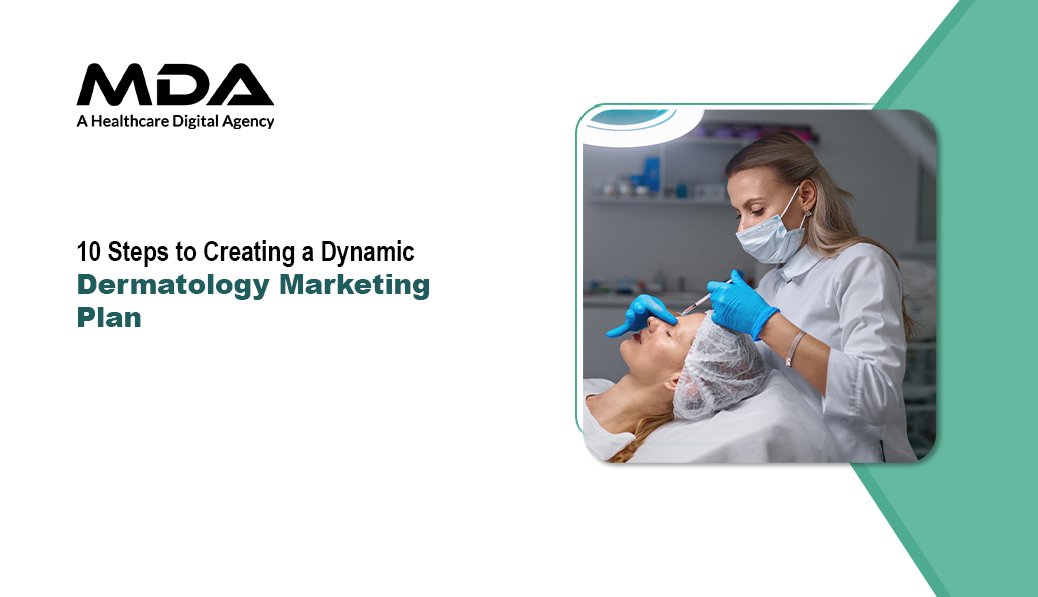
Dermatology is one of the most competitive medical specialties. Medical dermatologists treating acne and skin cancer compete with cosmetic clinics offering laser treatments and med spas competing on aesthetic services. Patients in this space are informed, visually driven, and quick to compare providers online.
A reactive approach to marketing does not work in dermatology. You need a structured plan that connects each tactic to a clear patient acquisition goal. This blog walks you through ten planning steps to build a marketing plan that grows your practice with measurable results.
Before planning where to go, understand where your patients are coming from now. Most dermatology practices have a rough idea, but few have hard data.
What to audit:
This audit gives you a baseline. Without it, every future investment is a guess. Most clinics discover that one or two channels generate the majority of patients, while others absorb budget without producing returns.
Dermatology serves multiple distinct patient audiences. A teenager with severe acne, a 45-year-old considering Botox, and a patient with suspected skin cancer all need different messaging.
Build at least three personas:
For each persona, document age range, common concerns, decision triggers, and preferred communication channels. Your marketing plan will only be as targeted as your personas allow. Generic messaging that speaks to everyone speaks to no one.
Vague goals like “grow the practice” do not guide execution. A dynamic marketing plan needs specific, time-bound targets that connect directly to revenue.
Examples of strong dermatology goals:
Tie each goal to a clinical or business outcome. This makes performance review meaningful and helps every team member understand what success looks like in measurable terms.
A dermatology website does more than display services. It converts visitors into appointment requests. If your current site is slow, cluttered, or lacks clear booking paths, it is undermining every other marketing effort.
Essentials for a high-converting dermatology website:
A specialized partner offering digital marketing for dermatologists builds websites that satisfy both clinical credibility and conversion psychology. Treat your website as a working asset that needs ongoing optimization.
Patients search dermatology terms with very specific intent. “Best acne dermatologist Noida” is different from “psoriasis treatment Delhi.” Your SEO strategy must match this granularity.
Focus areas for dermatology SEO:
A focused healthcare SEO approach compounds visibility over time and reduces dependence on paid acquisition.
Dermatology is one of the most visual specialties in medicine. Before-and-after photos, treatment videos, and patient stories communicate clinical capability faster than any text ever can.
Visual content to plan into your strategy:
Compliance matters. Every patient image must have signed consent that covers the specific use intended. Platform policies on medical imagery vary, so review Instagram, Facebook, and TikTok guidelines before publishing. Done right, visual content becomes your strongest trust-building asset.
Patients searching “dermatologist near me” or “best skin doctor in Gurugram” make decisions based on local visibility. Your Google Business Profile and local SEO foundation determine whether you appear in these high-intent searches.
Local SEO actions:
Local SEO often delivers the fastest return on dermatology marketing investment, particularly in metro markets.
Google Ads and Meta campaigns generate qualified inquiries when targeted precisely. Dermatology paid campaigns face additional compliance requirements because of restrictions on medical imagery, before-and-after claims, and aesthetic procedure advertising.
Planning a compliant ad strategy:
Without compliance awareness, even well-targeted dermatology ads can be rejected or suspended, wasting budget.
In 2026, patients ask ChatGPT, Google AI Overviews, and voice assistants questions like “best dermatologist for adult acne near me” or “how to treat melasma.” Practices that optimize for these AI-driven formats gain visibility most competitors are not yet capturing.
How to optimize for AI search:
This principle extends to other specialties. A digital marketing company for homeopathic doctors applies the same AI-readiness logic to homeopathy queries.
A marketing plan without measurement becomes a marketing wish list. Set up a reporting cycle that tracks performance against your Step 3 goals and identifies what needs adjustment.
Reporting essentials:
A healthcare digital marketing partner builds this reporting into every engagement, ensuring your plan adapts to real performance data, not assumptions.
A dynamic dermatology marketing plan is not built in a day. It starts with an honest audit, defines clear personas and goals, then layers in website conversion, SEO, visual content, local visibility, paid campaigns, AI optimization, and measurement.
Work through each step in order. Skip any one and the others lose effectiveness. Dermatology practices that treat marketing as a structured planning process consistently outperform those that chase isolated tactics.
Start by auditing your current patient acquisition channels and defining clear patient personas. Set measurable goals tied to revenue, then build your website, SEO, visual content, local visibility, paid campaigns, and measurement systems around those goals.
Local SEO combined with a strong Google Business Profile typically delivers the highest return for dermatology practices. Patients searching “dermatologist near me” or condition-specific local terms are high-intent, ready to book. Layer in social media, paid ads, and reviews for compounding effect.
Most dermatology practices allocate 5% to 10% of annual revenue to marketing. Newer practices or those in competitive metro markets may invest 12% to 15% during their first year. Cosmetic-focused practices often spend more due to higher patient lifetime value and competitive ad costs.
Yes. Dermatology is one of the most visual specialties, and platforms like Instagram and TikTok reward consistent visual content. Before-and-after images (with consent), educational reels, and short procedure explainers drive patient inquiries. Platform compliance on medical imagery is essential.
AI tools like Google AI Overviews and ChatGPT now answer dermatology queries directly. Practices that structure their content with clear FAQs, factual accuracy, and medical schema markup get cited in these AI responses. This is becoming as important as ranking in traditional search.

C – 81C, Sector – 8, Noida 201301, India


1025 Beamon Drive, Franklin 37064 Tennessee, USA
Sveavagen 34 111 34 Stockholm, Sweden

Copyright ©MDA. All rights reserved.

