Problem & Business Impact: Patients no longer scroll through ten blue links before choosing a hospital. They ask ChatGPT, Google Gemini, Perplexity, and voice assistants for direct recommendations. Hospitals that lack structured, AI-readable content are invisible during these critical decision moments. Over 50% of healthcare searches now result in zero clicks, meaning patients receive and act on answers without ever visiting your website. For multi-specialty hospitals competing across cardiology, oncology, orthopedics, and maternity care, this shift creates an urgent visibility gap that traditional SEO alone cannot close.
Solution & Delivery: Our hospital AEO services and hospital GEO services build the semantic infrastructure that makes your institution the cited authority across every AI platform. We implement department-level schema markup, physician credential structuring, FAQ-rich content architecture, and entity optimization tailored to each service line. From structuring your cardiology department’s expertise for ChatGPT retrieval to making your oncology outcomes visible in Google AI Overviews, every deliverable is designed to earn citations, not just rankings.
Credibility & Differentiation: With deep expertise across 1,000+ healthcare clients and recognized proficiency in India-specific compliance frameworks including NMC advertising guidelines and ABDM integration, we deliver AEO and GEO for hospitals with precision other agencies cannot replicate. Our approach combines clinical content accuracy with technical schema engineering, ensuring your hospital is trusted by both patients and the AI systems that guide them.

Most agencies treat hospitals as single entities. We build distinct AEO strategies for each clinical department, structuring cardiology, oncology, orthopedics, and neurology content independently. Each department receives its own schema architecture, FAQ framework, and entity mapping. This ensures AI platforms cite your hospital for specific conditions and treatments, not generic healthcare queries.

Healthcare content in India operates under NMC advertising guidelines, ABDM data standards, and the DPDP Act. Our content and schema implementations account for these frameworks from the start. Every FAQ answer, physician bio, and service description we create passes regulatory review before deployment. This eliminates compliance risk while maximizing AI visibility.

Hospital chains with locations across metros and Tier 2 cities need unified semantic infrastructure that strengthens brand authority without creating internal competition. We consolidate multi-location hospital entities under a single knowledge graph while maintaining location-specific relevance. AI systems recognize your network as one trusted institution, not fragmented competitors.

We monitor how ChatGPT, Gemini, Perplexity, Claude, and Google AI Overviews reference your hospital for priority queries. Monthly reports show citation frequency, competitor citation share, and specific query performance across each AI platform. This data drives ongoing content refinement and ensures measurable progress toward AI visibility dominance.

Indian patients search in Hindi, Tamil, Bengali, Telugu, Marathi, and English. Our GEO services for hospitals include multilingual content structuring that makes your hospital discoverable in regional language AI queries. We create schema-tagged content in each target language, ensuring AI platforms can cite your hospital regardless of the patient’s language preference.

AI systems trust named experts over faceless institutions. We build physician-level entity profiles with credential linking, publication references, and specialty schema for each doctor on your panel. When a patient asks “best cardiologist in Pune,” AI platforms pull from these structured profiles. This transforms individual physicians into citation-worthy authorities for your hospital.
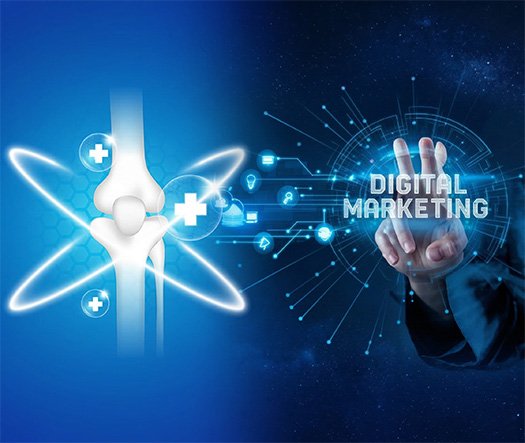
Hospitals invest in infrastructure, talent, and clinical excellence. Yet without AEO and GEO optimization, this expertise remains invisible to the AI platforms where patients increasingly begin their provider search. Effective hospital AEO services ensure that when a patient asks any AI system about treatments, conditions, or providers in your area, your hospital is the recommended answer. This is not surface-level visibility. It is the construction of machine-readable authority that compounds over time, making your institution progressively harder for competitors to displace. Our team combines clinical content expertise with technical schema engineering, building structured trust infrastructure that earns citations across every AI discovery channel.
Partner with India's specialized AEO GEO agency for hospitals today.
Every hospital engagement follows a structured, six-phase methodology that moves from diagnostic audit to sustained AI citation growth, reducing guesswork and accelerating measurable results.

We test your hospital’s current visibility across ChatGPT, Gemini, Perplexity, Claude, and Google AI Overviews using 50-100 priority patient queries. Each query is documented with current citation status, competitor citations, and content gaps. The audit also evaluates existing schema markup, entity signals, and E-E-A-T compliance. This phase delivers a precise baseline and a prioritized roadmap for every subsequent phase.

We build your hospital’s semantic identity by structuring departments, physicians, procedures, conditions treated, accreditations, and locations into a connected entity framework. Knowledge graph design ensures AI systems understand relationships between your cardiologist, your cardiac surgery department, and your hospital brand. This architecture becomes the foundation for all content and schema work.

We implement MedicalOrganization, Physician, MedicalProcedure, FAQPage, and HowTo schema across your website. Each department page, doctor profile, and condition page receives structured data aligned with the entity architecture. Technical validation ensures every schema element passes Google’s Rich Results Test and is parseable by LLM crawlers. Outputs include live schema deployment and a technical compliance report.

We restructure existing hospital content and create new pages using answer-first formatting that AI systems prefer. Each service line receives question-based headings, concise 40-60 word answer blocks, and supporting clinical depth. Physician bios receive credential structuring, and FAQ pages are expanded with natural-language patient questions. All content is reviewed for NMC compliance and clinical accuracy.

We amplify your hospital’s entity signals through healthcare directory optimization, medical publication citations, and structured presence on platforms that AI systems reference. Google Business Profile optimization, Practo and Lybrate profile structuring, and health portal listings create external validation signals. This phase builds the off-site authority that AI platforms require before citing your hospital.

We track citation frequency across all major AI platforms monthly. Performance dashboards show which queries trigger your hospital citations, which competitors are cited alongside you, and where new opportunities exist. Content and schema adjustments are made based on platform algorithm shifts and emerging patient query patterns. This phase ensures sustained citation growth over time.
Across 1,000+ healthcare clients spanning multi-specialty hospitals, diagnostic chains, and specialty clinics, our AEO and GEO implementations have delivered measurable citation growth. Explore how structured AI visibility strategies translated into real patient acquisition outcomes.
Our approach to hospital AEO services is grounded in three principles: clinical accuracy, technical precision, and scalable architecture. Whether you operate a 50-bed community hospital or a 500-bed multi-specialty institution, our GEO services for hospitals adapt to your operational scale and patient catchment. We work with government hospitals seeking public trust, private hospital chains pursuing competitive visibility, and specialty centers building niche authority. Every engagement prioritizes sustainable citation growth that compounds quarter over quarter.
Cross-vertical experience sharpens our execution. Insights from optimizing oncology centers inform how we structure cardiology content. Learnings from diagnostic chain AEO projects improve how we handle multi-location entity consolidation for hospital networks. Industries we serve include multi-specialty hospitals, single-specialty surgical centers, diagnostic imaging chains, fertility and IVF clinics, dental hospital groups, ayurveda and wellness institutions, rehabilitation centers, and mental health facilities.

Hospitals require AEO and GEO partners who understand clinical workflows, regulatory constraints, and the complexity of multi-department digital presence. Our work has earned recognition from healthcare institutions across India and international markets, driven by a commitment to measurable AI citation outcomes rather than vanity metrics. Three specific capabilities define our approach.
AI-Native, Not Retrofitted: We build hospital content for AI retrieval from the ground up, not by repurposing old SEO blog posts with schema overlays.
India Regulatory Expertise: Every content piece and schema implementation complies with NMC, ABDM, and DPDP Act requirements, eliminating post-launch compliance issues.
Revenue-Connected Measurement: We connect AI citation data to patient inquiry volume, linking visibility metrics to actual appointment growth and revenue impact.
We deploy a curated technology stack designed for healthcare-specific AEO and GEO execution. These tools enable precise schema implementation, citation monitoring, and performance tracking across all AI platforms hospitals need to dominate.









Vishal’s team transformed our lease application from a conversion killer into a revenue driver. The 42 percent improvement in conversion rate directly impacted our bottom line, and reducing completion time from eighteen to six minutes made the process actually enjoyable for customers.
TIS took our 2010-era warehouse management portal and completely transformed it into a modern, intuitive platform through deep user research and human-centered design. Customer satisfaction jumped from 42 to 87 percent, and our clients now view the portal as a competitive advantage rather than a necessary evil. The role-based dashboards and mobile responsiveness they designed have fundamentally changed how our customers interact with their inventory data.
TIS transformed our dashboard from a data dump into a decision-making tool. Executives can now identify critical trends in thirty seconds instead of spending hours compiling spreadsheets.
Evaluating AI visibility services for your hospital? Here are answers to the questions decision-makers ask most.
AEO (Answer Engine Optimization) structures your hospital’s content so AI platforms like Google AI Overviews, voice assistants, and featured snippets can extract and display your information as the direct answer to patient queries. GEO (Generative Engine Optimization) positions your hospital as a cited source when AI systems like ChatGPT, Gemini, and Perplexity generate comprehensive responses. Traditional SEO focuses on ranking your website in a list of links. AEO and GEO for hospitals focus on making your institution the answer itself, often without a click. Both disciplines require structured data, entity optimization, and clinically accurate content. They complement SEO rather than replace it.
Evaluate agencies on three criteria: healthcare-specific experience, technical schema capability, and citation measurement infrastructure. Ask potential partners to demonstrate current hospital clients with verified AI platform citations. Confirm they understand medical compliance requirements, including NMC advertising guidelines for Indian hospitals. Verify they track citation frequency across ChatGPT, Gemini, Perplexity, and Google AI Overviews rather than just traditional keyword rankings. The best AEO and GEO agency for hospitals will provide a baseline AI visibility audit before proposing strategy. Avoid agencies that sell AEO as repackaged blog content with schema added as an afterthought.
Hospital AEO services in India range from INR 75,000 to INR 3,50,000 per month depending on hospital size, number of departments, locations, and target languages. Multi-specialty hospitals with 10+ departments and multiple locations typically require higher investment due to the volume of schema work, content creation, and citation monitoring involved. Single-specialty hospitals or individual diagnostic centers can begin with focused programs at lower investment levels. Project-based audits generally range from INR 1,50,000 to INR 5,00,000. The investment reflects specialized work distinct from traditional SEO, including entity architecture, multilingual content structuring, and ongoing AI platform monitoring.
Most hospitals observe initial AI platform citations within 30 to 60 days after structured data deployment and content optimization. Meaningful citation frequency growth across multiple AI platforms typically appears within 90 days. Full-scale results, including consistent citations across ChatGPT, Gemini, Perplexity, and Google AI Overviews for priority service lines, generally require 4 to 6 months of sustained effort. Hospitals with existing strong domain authority and quality clinical content often see faster initial traction. New websites or those with thin content require additional foundational work before citation acquisition accelerates.
No. AEO and GEO build upon strong SEO foundations. Hospitals need quality backlinks, fast-loading pages, mobile-responsive design, and well-structured content for both traditional search rankings and AI citation eligibility. AEO adds structured data implementation, natural language optimization, entity relationship mapping, and conversion strategies for zero-click experiences. Think of SEO as the base infrastructure and AEO/GEO as the intelligence layer that makes your content citable by AI systems. Hospitals that invest in AEO alongside SEO typically see improvements in both AI citations and traditional organic rankings simultaneously. For hospitals looking to strengthen their SEO foundation, our hospital SEO services provide the technical groundwork that AEO builds upon.
Five platforms currently dominate healthcare AI discovery: Google AI Overviews (appears at the top of Google search results for medical queries), ChatGPT (used by patients for treatment research and provider recommendations), Google Gemini (integrated into Android devices and the Google app for real-time local queries), Perplexity (favored for research-heavy healthcare queries with citation requirements), and Claude (growing in professional and enterprise healthcare contexts). Each platform weighs different signals. Google AI Overviews prioritizes Google Business Profile data and local signals. ChatGPT relies more heavily on website content quality and entity clarity. A comprehensive hospital GEO strategy addresses all five platforms simultaneously.
Indian patients search for healthcare in Hindi, Tamil, Bengali, Telugu, Marathi, Kannada, and English. Our AEO services for hospitals include creating structured, schema-tagged content in each language your patient base uses. This is not machine translation. Each language version is crafted with regional medical terminology, local health concerns, and culturally appropriate phrasing. AI systems like Gemini and ChatGPT increasingly support regional language queries, meaning hospitals with multilingual AEO infrastructure capture patients that English-only competitors miss entirely. Tier 2 and Tier 3 cities show particularly strong regional language search behavior.
Hospitals are not single-service businesses. A multi-specialty hospital might have cardiology, neurology, oncology, orthopedics, maternity care, and pediatrics departments, each requiring distinct AEO strategies. Department-level AEO creates independent entity profiles, FAQ frameworks, and schema implementations for each clinical unit. When a patient asks “best oncologist in Chennai” or “knee replacement surgery cost in Mumbai,” AI systems need structured department-specific content to generate accurate answers. Treating a hospital as one entity forces AI systems to guess which department to cite, often resulting in no citation at all.
We track both AI visibility metrics and business outcomes. Visibility metrics include citation frequency across each AI platform, answer position in featured snippets, competitor citation share analysis, and zero-click impression volume. Business metrics include AI-referred website traffic, patient inquiry conversion rates from AI sources, appointment booking attribution, and revenue impact. Monthly dashboards connect AI visibility data to actual patient acquisition numbers. This approach ensures hospital leadership sees return on investment rather than abstract ranking reports. We also benchmark your citation share against competing hospitals quarterly.
Absolutely. AEO and GEO for hospitals actually benefit smaller institutions disproportionately. AI platforms prioritize content authority and specificity over domain size. A focused 100-bed specialty hospital with well-structured AEO content for its core treatments can outperform a 500-bed corporate hospital with generic, unstructured content. Smaller hospitals can target niche queries like specific procedures, rare conditions, or underserved geographic areas where large competitors have thin content. The investment is proportionally lower, and the competitive window for building AI citation authority is narrowing as more hospitals adopt these strategies.
Google Business Profile (GBP) is foundational for hospital GEO services targeting local patient queries. When patients ask Google Gemini or Google AI Overviews for “hospital near me” or “best orthopedic hospital in Hyderabad,” the AI draws heavily from GBP data. Accurate NAP (name, address, phone) information, updated service lists, physician profiles, patient reviews, and operating hours all feed into AI-generated local recommendations. Hospitals with optimized GBPs receive significantly higher citation rates in Google’s AI features. We optimize GBP for every hospital location as a standard part of our engagement.
Healthcare content falls under Google’s YMYL (Your Money Your Life) classification, requiring the highest standards of expertise, experience, authoritativeness, and trustworthiness. Our AEO implementations address this through physician-authored or physician-reviewed content with visible author credentials, medical review dates on every content piece, citations to peer-reviewed sources and clinical guidelines, and compliance with NMC advertising rules that prohibit superlative claims and misleading guarantees. AI systems apply even stricter quality filters to medical content than traditional search algorithms. Hospitals that cut corners on E-E-A-T compliance risk being excluded from AI citations entirely.
Effective hospital AEO requires five content types: department-specific service pages with structured procedure descriptions, physician profile pages with credential schema and specialty details, condition-focused educational content answering patient questions, FAQ pages organized by department with natural-language question headings, and location pages for each facility with local health context. Each content type must follow answer-first formatting with concise 40-60 word direct answers followed by supporting clinical detail. Content should be reviewed by medical professionals for clinical accuracy and by our team for AEO structural compliance. For insights on creating healthcare content that performs, explore our healthcare digital marketing blog.
Hospitals operate at greater structural complexity than clinics or solo practices. A hospital AEO strategy must address multiple departments, dozens of physicians, hundreds of procedures, several locations, and varied patient demographics simultaneously. The entity architecture is significantly more complex, requiring knowledge graph design that connects individual physicians to departments, departments to service lines, and service lines to the hospital brand. Clinics typically need entity profiles for 1-3 physicians and a focused set of procedures. Hospitals need coordinated semantic infrastructure across 10-50+ physicians and 5-20+ departments, all unified under brand-level authority.
The process begins with a complimentary AI visibility assessment. We test your hospital’s current citation status across ChatGPT, Gemini, Perplexity, and Google AI Overviews using queries relevant to your key service lines and geographic market. This assessment identifies your baseline visibility, your top competitors in AI citations, and the highest-impact opportunities for immediate improvement. From there, we recommend a phased implementation plan aligned with your budget, priority departments, and patient acquisition goals. Most hospitals begin with their top 3-5 revenue-generating service lines and expand AEO coverage progressively. Contact our team to schedule your assessment and receive a custom AI visibility report within five business days.

C – 81C, Sector – 8, Noida 201301, India


1025 Beamon Drive, Franklin 37064 Tennessee, USA
Sveavagen 34 111 34 Stockholm, Sweden

Copyright ©MDA. All rights reserved.